
To understand our position on unions, it is helpful to understand not only what a union is, but what a union is not. A union is not a club or a social organization.
A union is a business.
In their efforts to grow their business, union organizers may make a lot of promises to attract new members. (And, there's no law that prevents them from making promises they can't necessarily keep.) We encourage you to stay curious and ask questions when talking to a union organizer. You might even ask them to share what they're promising in writing.
In the meantime, take a look below at what unions can do vs. what they can't do.
Collect dues, fees, fines and assessments
Negotiate and make proposals
Refuse to act on a union member's grievance
Represent all employees even those who voted against the union
Require union members to go on strike
Discipline, issue penalties or fine members who violate union bylaws
Guarantee employment
Prevent layoffs
Guarantee a union contract
Guarantee higher wages
Guarantee better benefits
Guarantee hours
Prevent termination for just cause
Set job standards
Fire or transfer managers
Negotiate/Determine leadership changes
Prevent organization changes
Change modify Federal statutes (i.e. DOT, Fair Labor Standards Act, OSHA, FMLA, etc)
Unions represent their members in dealings with employers. In return, unions charge fees for their services. These fees are often deducted directly from union members' paychecks.
Today, less than 6% of workers in the private sector belong to a union. Like any business, unions need a revenue stream to stay in business. This revenue comes from members paying dues. Unions need new members to survive.
The main source of money for unions comes from dues, fees and assessments paid by their members.
PBNA is an attractive target for unions because of our large workforce and growth throughout the country. The more members that unions have, the more membership fees and dues they can collect.
Union Membership
(Private Sector)
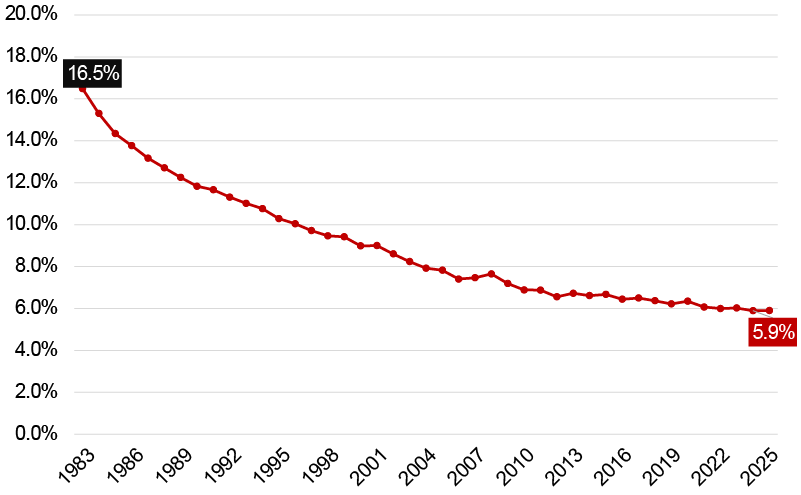
Source: unionstats.com, compilation of U.S. Bureau of Labor Statistics data